

Kontomire stew is a well-known Ghanaian stew made from the leaves of the cocoyam plant. It can be made solely with the leaves of the cocoyam or taro plant but it can also be mixed with agushi seeds. This recipe mixes kontomire and agushi to make a tasty Ghanaian favourite.

Kontomire stew can be made in so many different ways, with or without palm oil, cooked kontomire with hot palm oil poured over it, mixed with agushi seeds, or mixed with garden eggs.
Whatever version you choose to make, the most important thing is that it tastes good.
Kontomire stew just like agushi stew, can be eaten with boiled yam, boiled green or ripe plantain or rice. Some people even eat it with Gari.
Jump to:
Ingredients
This recipe uses fresh kontomire leaves (freshly cut from the garden) and a list of other ingredients.
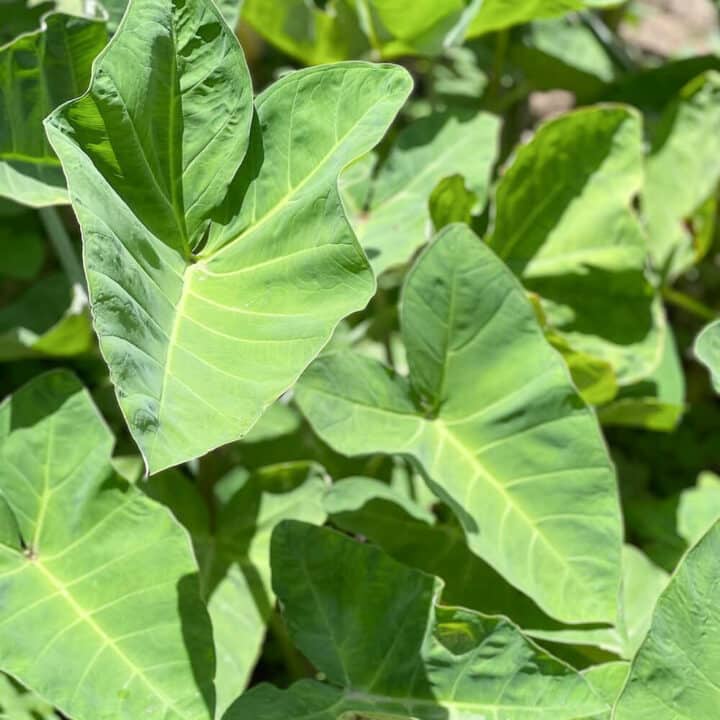


- kontomire leaves - these leaves which come from the cocoyam or taro plant are used to make kontomire stew. Careful, do not eat raw! Kontomire or taro leaves need to be cooked properly as the leaves contain calcium oxalate which cause itchiness in the throat. They are not like spinach which can be consumed raw.
- dried shrimp - packed with flavour, these will make your stew delicious.
- smoked mackerel - this is personally my favourite fish to use but you can use tuna or any other smoked fish of choice.
- momoni - this is cured salted pungent fish with a mushy texture that adds incredible taste to this stew.
- koobi/akpatogui - salted dried tilapia which just like momoni, adds flavour and salt to the stew.
- tomatoes - these are necessary for the base of the stew.
- palm oil - is typically used for kontomire stew and a lot of other Ghanaian stews
- agushi seeds - these seeds are ground or blended and then added to the stew as well. The seeds can be used to make agushi stew as well or toasted and added to a salad.
Instructions
Kontomire stew is not difficult to make - you may not have all the ingredients available to you, depending on where you are however, I mention substitutions and variations below.
First wash, remove the stems and slice the kontomire or cocoyam/taro leaves. Using a coffee grinder or food processor, grind the agushi seeds - they do not need to be very fine and therefore do not over-process.


Blend the tomatoes with the scotch bonnets, the tomatoes and the shrimp. For the Koobi/ Akpatogui, boil and throw out the water to get rid of some of the salt.
As mentioned in my Gari Foto recipe, Koobi or Akpatogui is salted, dried Tilapia and adds incredible taste to dishes.


The next step is to slice and fry the onions in palm oil. Add the blended tomato mix as well as the koobi and mackerel pieces. Add a bit of water if the stew is too dry and then add the ground agushi. You can prepare agushi in different ways. One such way is shown in this agushi stew recipe.


Finally, add the kontomire and stir into the stew. Leave to cook thoroughly and then turn off the heat. See tips on cooking kontomire properly and alternative ways to cook them.

Substitutions & Variations
- Vegetable oil - if you aren't a fan of palm oil or you just want some variation, then you can use vegetable oil in place of palm oil for the stew.
- Mashed kontomire - instead of cutting the kontomire leaves and adding them directly to the stew, you can cook the leaves first, mash them in an earthenware bowl or any other kind of mashing bowl and then add that to the stew. See tips for more on uncooked kontomire.
- Black-eyed peas/beans - Kontomire stew is also delicious with cooked beans. Omit the agushi and replace it with cooked beans.
- Beef - if you would rather have meat in your stew than fish, then steam the beef with salt, onions ginger and scotch bonnets until tender and then add that to the stew.
- Garden eggs - another ingredient you can replace the agushi with is cooked garden eggs. Cook the garden eggs, mash them or chop them into small pieces and then add them to the stew.
- Fish sauce - momoni is a salted fermented fish with a pungent smell and flavour. In its absence, you can use a few drops of fish sauce,
Storage
Kontomire stew freezes very well. Just be mindful of not overcooking if you intend to freeze for later. As you are heating the thawed stew, it will still further cook.
Tip
- Uncooked or partially cooked kontomire can make your throat itch. It is therefore important to cook kontomire very well. A great tip is to steam the sliced kontomire until tender before adding it to the stew especially if it is your first time cooking with kontomire.
- Some people are allergic to the leaves themselves so even touching the leaf or coming into contact with the sap can cause allergic reactions. If you have never eaten or cooked with kontomire before then this is something to be mindful of.
- Koobi / Akpatogui is very salty, therefore if you use it when cooking, add it early on into your stew so that you do not risk oversalting the kontomire and agushi stew.

FAQ
Kontomire is not the same as spinach. Kontomire leaves are obtained from the cocoyam/taro plant. Spinach on the other hand is a creeping plant. If you do not have kontomire at hand, you can use spinach as a substitute, even though the tastes are not the same.
Some people react negatively to kontomire even by simply touching it. Also, if you do not cook the kontomire leaves well, they can cause an itchy sensation in the throat. This is caused by calcium oxalate
You do not have to cook the leaves before adding them to the stew, however steaming them before adding to the stew prevents the possibility of undercooking them and having them irritate your throat.
Kontomire leaves are also used to make ebunubunu, a green soup eaten in Ghana.
The leaves can be eaten but also cocoyam, the root of the plant can be eaten. It can be boiled and eaten with stew, pounded into fufu, or made into mpotompoto.
Related Recipes
Some great other Ghanaian recipes you will love:
- Kelewele - a swicy snack made from ripe plantain and spices
- Nkate cake - a snack made with peanuts and sugar
- Waakye - forget the jollof wars, this is what you should be eating
- Waakye stew - you could eat waakye with any stew technically but why not with this perfectly made stew for waakye.
- Groundnut soup - a favourite for many people, this recipe uses chicken.

Kontomire and Agushi Stew
Ingredients
- 6 large kontomire leaves
- 3 tablespoons agushi seeds
- 2 scotch bonnets
- 3 medium tomatoes
- 1 medium smoked mackerel bones removed and divided into smaller chunks
- 1 medium koobi /akpatogui
- 1 momoni small piece about the size of the square of a chocolate bar
- 8 tablespoons palm oil more or less as desired
- dried shrimp handful
- salt to taste
Instructions
- Rinse the kontomire or taro leaves in water, cut off the stalks (discard )and slice thinly. See notes 1.
- Slice the onions and set aside.
- Using a coffee grinder or a food processor, grind the agushi seeds into finer bits.
- Wash the shrimp several times, to get rid of any sand.
- Blend the shrimp with the scotch bonnets and the tomatoes until smooth.
- Cook the koobi for about 10 minutes and throw the water away. Using a fork, flake the fish and get rid of any bones.
- In a pot and over medium heat, add the palm oil and then add the momoni, breaking it apart with a wooden spoon.
- Add the onions and fry for about 3 minutes and then add the blended mix.
- Add a bit of water and leave to simmer for about 5 minutes.
- Add the koobi and then the smoked mackerel and leave to simmer for a further 5 minutes.
- Add the ground agushi, stir, and leave to cook. This should take another 7-10 minutes. Taste for salt.
- Now, add the sliced kontomire, add about 100-200 ml of water, and cover the pot for about 3 minutes. See notes 2.
- Take off the lid and stir the kontomire into the stew, making sure not to break the smoked fish.
- Cook for about 15-25 minutes until the kontomire is tender and then turn off the heat.
- Serve with boiled yam, cocoyam, ripe plantain or rice.
Video
Notes
- Kontomire can irritate the throat when not cooked properly as the leaves contain calcium oxalate. Some people are sensitive to raw leaves by simply touching them. If you have never cooked with kontomire take precautions. You can steam the sliced leaves before addding them to the base stew. Kontomire should never be consumed raw.
- The kontomire needs enough liquid to cook through. You may end up using less water but your final stew should not be watery.
Samson kportie says
I am very happy to know this.